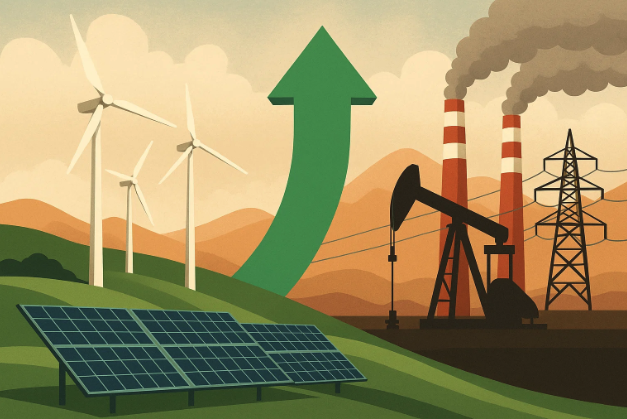
Federal incentives are disappearing for renewables — but states across the country are stepping up their clean energy commitments to encourage development.
The landscape for renewable energy projects in the U.S. has changed significantly in the last month, with the "One Big, Beautiful Bill Act" introducing new complexities and a tougher regulatory environment for renewables. But while the federal incentives are disappearing for renewables, states across the country are stepping up their clean energy commitments to encourage development. Even without federal incentives, the economics of clean energy continue to make it the most affordable solution to decarbonize the power sector and meet higher grid demands from the hyperscale AI data-center boom, the electrification economy, and a resurgent domestic-manufacturing sector. For developers, it's critical to focus efforts in "energy-friendly" markets at the state level to cope with the changes and continue to get projects done.
Despite federal headwinds, several US states continue to incentivize clean energy through innovative legislation, regulatory reforms, and sustained investment, making them attractive options for developers.
Understanding the intricate dynamics between state-level policies, local permitting nuances and social and political risk is key to project approval. At Flypower, we provide AI-powered insights to help you navigate these challenges, ensuring your projects are completed on time and without unexpected roadblocks.
States Leading the Charge in Clean Energy Development in 2025 and Beyond
Tier 1: States with Strongest Programs
- New York: The state still mandates 70% renewable electricity by 2030 and 100% zero-emission power by 2040, and NYSERDA is still moving its offshore-wind procurements forward even as federal permitting delays slow other aspects of the sector.
- Michigan: Public Act 233 of 2023, effective November 29, 2024, centralizes the approval process for large-scale solar, storage, and wind projects with the Michigan Public Service Commission, overriding restrictive local ordinances and streamlining development. Senate Bill 271 mandates a 100% clean-energy standard by 2040 and sets a 2.5 GW energy storage target — a clear, long-term commitment that creates a stable, attractive market for investors.
- Minnesota: In 2024, Minnesota enacted SF 4942, a pivotal permitting reform introducing dual permitting tracks that streamline approval for both small and large-scale renewable projects. The state also has a 100% clean energy standard by 2040.
Tier 2: States with New Incentives Passed or Under Consideration
- California: More than 25,000 MW of clean energy capacity added since 2020, with another 20,000 planned by 2030. Major CEQA reforms through AB 130 and SB 131 may streamline approvals for some renewables projects, and $270M+ is earmarked for the Long-Duration Energy Storage Program.
- Colorado: Actively considering an accelerated Renewable Portfolio Standard aiming for 100% clean energy by 2040, plus a new law allowing developers to place transmission lines in state highway right-of-way.
- Illinois: HB 4412 (P.A. 102-1123) bans county-level moratoria and installs uniform statewide setbacks, forcing local boards to rule within 30 days of a hearing — critical after several county bans in 2022.
- Maryland: A statewide 100% clean energy goal finalized by executive order in 2024, with the proposed POWER Act setting an 8.5 GW offshore-wind goal by 2031.
- Maine: A codified 100% carbon-free energy goal by 2040 — 90% from renewables — opening new development opportunities for wind and solar.
- Alaska: The legislature is considering its first Renewable Portfolio Standard and increased state funding for renewables.
- Oregon: Already on a 100% clean-electricity path by 2040, and considering pairing pumped-storage with new transmission lines.
While these state overviews provide a broad perspective, counties and even towns have their own unique regulations and their own social and political dynamics around new development. There will be challenges anywhere for renewables projects, but against the backdrop of federal rollbacks, these state incentives offer a reprieve.
Unlock Your Project's Potential
The future of clean energy is still promising, but successful developers need a deep understanding of local dynamics and the ability to adapt swiftly to change. Flypower empowers community engagement professionals to make informed decisions, build strong community relationships, and accelerate the transition to a sustainable energy future.
Our AI-powered insights provide a hyperlocal understanding of community dynamics, project history in the area, permits and regulations, and more. We help you identify potential issues early, engage effectively with local decision makers (and those who influence them), and streamline your project from site selection through development.
If you are interested in gaining tailored insights for a particular jurisdiction and want to ensure your renewable energy projects are set up for success, reach out.